Learn whether hair from another person can be used for a hair transplant, why donor compatibility is important, and what the safest, medically approved hair restoration options are.
Learn whether hair from another person can be used for a hair transplant, why donor compatibility is important, and what the safest, medically approved hair restoration options are.
A multitude of men and women from different regions of the world experience hair loss, and search for methods of treatment. One of the frequently asked questions by patients is: “Can I get a hair transplant from another person?”
On the surface, that question does not seem unreasonable. If a kidney, liver, and even blood can be donated, what is the reason that donated hair follicles can’t be? The answer is unfortunately beyond complicated.
The short answer is no—the transplant of hair follicles from another person is generally not feasible as the hair follicles from another person will be rejected by the body’s immune system. The following will help you to make educated choices regarding your hair restoration through the understanding of the immune system and its response.
In this guide, we will answer the question: can you get a hair transplant from another person? We will explain why hair transplant from another person does not work, and what options you do have. We will also explain the evolution of hair transplant methods, and procedures like FUE Hair Transplant in Delhi that are helping thousands of people regain their hair.
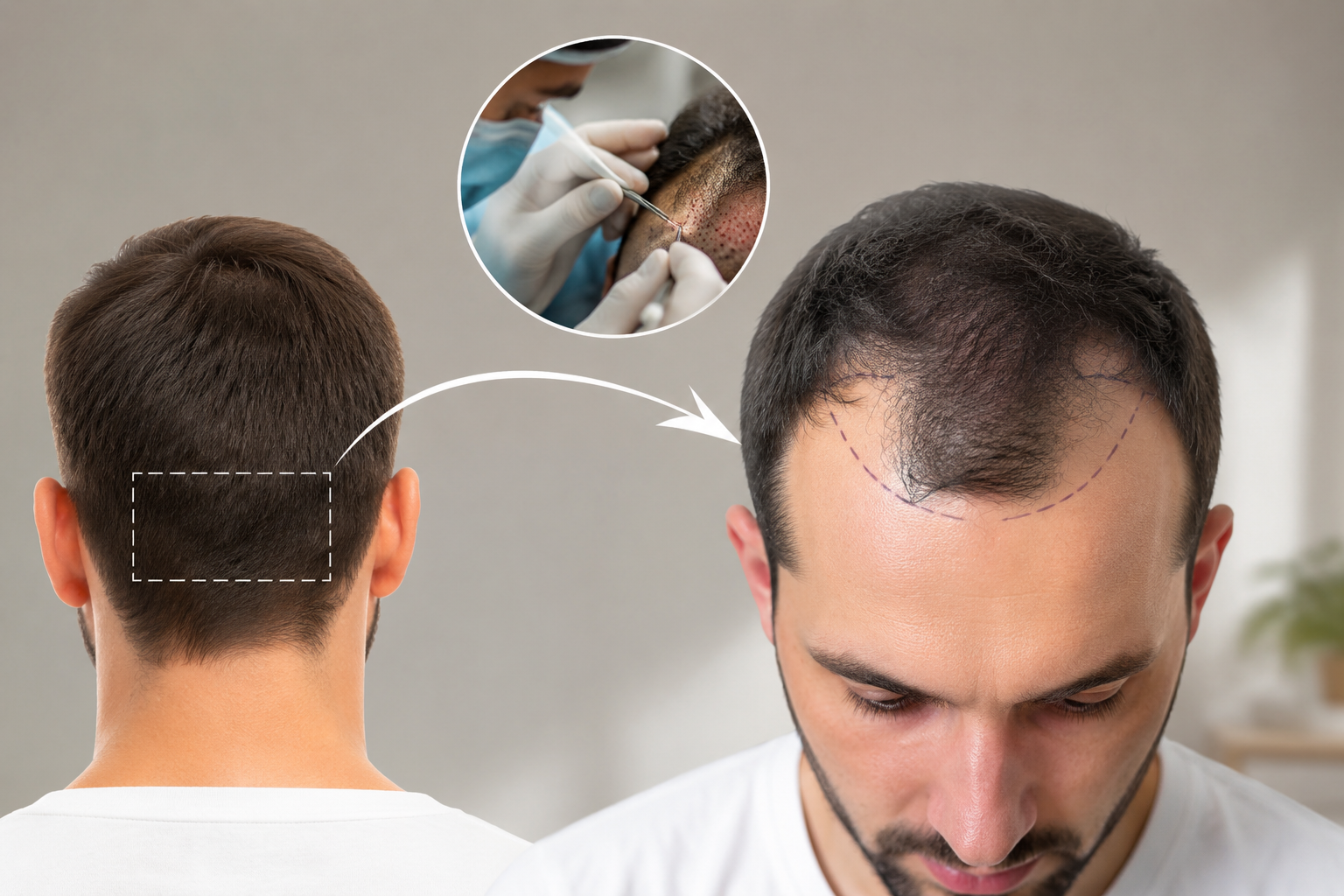
A hair transplant involves the relocation of hair follicles from the donor area which is usually decided by the physician as an area on the body which is unlikely to experience hair loss on the patient. A recipient area of hair loss would also need to be designated.
Donor areas are most often found on the sides and/or the back of the scalp.
Transplantation is often carried out by two methods:
Follicular Unit Extraction,
Follicular Unit Transplantation.
In the present day, the FUE technique to carry out hair transplants is the preferred one, especially in the city of Delhi, due to the minimally invasive nature of the procedures, improvement in the lasting of scars, speed in recovery and the overall improved quality of the result.
Can Hair Be Donated by Another Person?
The short answer is No.
Hair transplants, unlike hair extensions or wigs, do not involve dead hair. The hair follicles are living tissues and contain individual-specific genes.
When hair follicles from another person are implanted onto your scalp, your body’s immune system will attack it as it recognizes the follicles as foreign tissues.
In order to achieve even a low possibility of success for hair transplants, a person would need to take immunosuppressants for life.
The cost of these medications is not worth the transplants.
The immune system is always on the lookout and fighting off anything foreign that enters the body.
Humans have their own individual Human Leukocyte Antigens (HLA) which can be compared to ID cards.
When another person's hair follicles are introduced into the body:
This describes the reason why lifelong anti-rejection medicines are mandatory for patients who receive an organ transplant.
Hair transplantation is voluntary and is seen as a cosmetic procedure, therefore, using immunosuppressive drugs is not advisable for purely aesthetic reasons.
Hair transplantation is an example of an autologous transplant because the donor and recipient are the same individual.
There are benefits unique to using your own hair follicles:
These factors are why your own hair is always used in hair transplantation.
There are many steps to this planned procedure.
The surgeon reviews:
The pattern of hair loss
The density of hair in the donor areas
The condition of the scalp
The history of the scalp
The estimated number of grafts needed
Donor Hair Extraction
Healthy follicles are taken from:
Back of the scalp
Sides of the scalp
Beard (if needed)
Recipient Area Preparation
Consideration of following is involved while making small incisions:
Design of hairline
Direction of natural growth
Density
Proportions of face
Graft Placement
Individual implantation of each follicle occurs.
Placement affects:
Natural looks
The density of the hair
Future styling
It is interesting to note that there is a rare exception.
The genetic structures of identical twins are the same.
Because their immune systems recognize each other's tissues in the same way, hair transplants from one identical twin to another have actually been successful.
That said, the scenario we mentioned is very rare and generally does not apply to most people.
Can Family Members Donate Hair?
Many people ask whether:
Brother
Sister
Father
Mother
Son
can donate hair.
The answer remains No.
Even close relatives have different immune systems.
The body will still reject transplanted follicles.
Artificial hair implantation has been tried in multiple countries.
Those synthetic fibers carry a number of disadvantages such as:
The danger of infection
Scalp irritation
Reaction to foreign body
Breakage
Low quality long-term results
Due to being riskier, most experienced surgeons recommend natural hair transplantation.
Some patients have:
Severe baldness
Previous surgeries
Thin donor regions
In these cases, hair from the body may be used.
Common donor sources include:
Beard
Chest
Back
Arms (in certain cases)
Body hair behaves a little differently but can be a great option to help improve density.
Beard Hair as an Alternative Donor Source
In case individuals have less scalp donor hair available, using beard hair follicles could be a perfect option.
These benefits involve:
The thickness of hair follicles
Good survival rates
Increased number of hair grafts available
Good coverage
Patients searching for Beard hair Transplant in Delhi benefit from the use of the same latest techniques of extraction used in scalp hair transplants.
Not quite.
Body hair has differences in:
In this way, the hair restoration process requires scalp and body hair.
In the previous ten years, remarkable strides have been made in the field of hair restoration.
Among the major discoveries that happened in this field in the past decade is the method called Follicular Unit Extraction (FUE)
The well-known merits of FUE method are as follows:
➔ No need for stitches
➔ Very little scarring
➔ Quick healing
➔ Excellent aesthetics
➔ No side effects
FUE Hair Transplant in Delhi is the most effective method to have very good cosmetic results with short recovery time as well.
With the Sapphire FUE technique, sapphire blades are used to achieve
• Smaller incisions
• Less trauma to surrounding tissue
• Faster healing time
• Enhanced hair density
DHI (Direct Hair Implantation)
The DHI technique uses a special pen to extract and implant hair directly into the balding area, resulting in:
• Increased precision
• Accuracy in hairline creation
Who Is a Good Candidate for Hair Transplant?
The people who are the best candidates for hair transplant surgery are:
-Those with male pattern baldness
-Those with female pattern baldness
-Those with sufficient donor hair
-Those who can ensure donor hair won’t fall out on its own
-People with realistic expectations
People with medically active hair loss should get the proper diagnosis and treatment before proceeding with surgery.
Hair Transplant for Women
Hair transplant isn't just limited to men.
Women suffering from:
- traction alopecia
- hairline receding
- hair loss due to scar
- thinning of hair around temples
can benefit a lot.
Many women today opt for Female Hair Transplant in Delhi to add volume to their hair without dropping their natural appearance.
Identification of the appropriate types of hair loss patterns is essential as they differ in women compared with men.
Hairline plays a key role in enhancing facial aesthetics.
A poorly designed hairline does not look natural even in terms of a successful hair transplant procedure.
The following aspects are taken into consideration during the hairline design process at a professional hairline transplant clinic in Delhi:
-Shape of the face
-Age
-Gender
-Already established hair loss
-Expected hair loss in the coming years
This unique approach is effective for guaranteeing a highly attractive face.
Eyebrow hair loss is sometimes corrected through hair transplantation procedures.
Some of the reasons for eyebrow hair loss could be:
-Genetics
-Over-plucking
-Trauma
-Injury
-Medical issues
There are many options available these days for eyebrow transplants.
The procedure involves taking hair follicles from the scalp to create your eyebrows.
Can PRP Help Hair Growth?
A lot of people inquire if surgery is the only possible option.
The reply is no.
One of the most widely-recommended options without the need for surgery is PRP treatment from Delhi.
PRP (platelet-rich plasma) treatment involves:
– The patient’s blood being drawn
– Platelet-rich plasma being separated
– Growth factors being injected into the scalp.
The advantages are:
– Less hair loss
– Increased hair density
– Quicker recovery after transplantation
– Increased graft survival
– Better blood supply to the scalp.
PRP is frequently suggested with hair transplantation to ensure better results.
What Outcomes Should You Anticipate?
Hair restoration entails tolerance.
Standard schedule:
Four Weeks
-Initial loss of hair.
-Healing occurs
Twelve Weeks
-New growth starts.
Twenty-four weeks.
-Noticeable enhancement happens.
Thirty-six weeks
-Good density increases.
One Year and above
-The last fulfillment becomes clear.
Indeed.
Considering the fact that the donor hair is sourced from anatomical areas which are resistant to hair loss, the implanted follicle would typically continue to thrive for several years after the transplant.
However:
The process of aging is still natural.
The non-implanted hair can still thin out as time goes by.
Some doctors often suggest:
-PRP sessions
-Medications (where needed)
-Good lifestyle
-Regular check-up
For the ideal hair density.
While regarded as safe, every surgical process has risks involved.
Potential complications include:
- Swelling
- Short-term numbness
- Infection (very rare)
- Shock loss
- Minor bleeding
- Folliculitis
Having an experienced surgeon reduces these risks.
Preparing for Hair Transplant Surgery
Typically, patients will receive recommendations to:
Quit smoking.
-Not consume alcohol prior to the operation.
-Adhere to the guidelines for medications.
-Ensure cleanliness of the scalp.
-Consume healthy breakfast.
-Opt for comfortable clothing.
By following pre-operative recommendations, patients can enjoy an easier recovery.
Typically, patients will receive recommendations to:
The recovery process is usually uncomplicated.
Most patients are able to:
- Go back to work after a few days.
- Shampoo their hair only when the doctor gives them the go-ahead.
- Return to their workout routine after about two weeks.
- Experience complete recovery within the next few weeks.
Appropriate care after the transplant greatly enhances success rates of the graft.
Myths About Hair Donation
Myth 1: Anyone Can Donate Hair
Hair follicles cannot be shared in the same manner as one would share blood.
Myth 2: Family Hair Works Better
Even brothers and sisters do not have the same immune system types.
Myth 3: Hair from Another Person Will Eventually Adapt
The immune system will keep attacking any non-self follicles.
Myth 4: Hair Extensions Are the Same as Hair Transplants
Hair extensions involve an application of artificial/donated hair to the natural hair already on one's head.
In contrast to hair transplants, hair extensions use live follicles that will continue growing.
Future of Hair Transplantation
The investigation of the following techniques is ongoin
- Hair cloning
- Stem cell treatment
- Hair follicle regrowth
- Tissue engineering
- Gene therapy
These methods have a lot of promise, but they are still in the research phase.
At this moment, the most effective and reliable available method for hair restoration is the autologous hair transplantation technique.
Why Choosing the Right Clinic Matters
The accomplishment of hair transplantation is reliant on:
- Competence of the doctor
- Use of the latest technology
- Decent planning
- Management of the donor
- Design of the natural hairline
- Complete postoperative care
Patients should put more emphasis on experience and quality rather than just on cost.
Can a hair transplant be done using someone else’s hair?
No, it cannot. The hair follicles of another person are seen as foreign tissues by your immune system, which rejects them. Unlike organ transplants, childhood, lifelong prevention of tissue rejection is impractical and unthinkable.
The safest and most effective solution is autologous grafting, in which healthy hair follicles taken from your body are transplanted into the hair loss affected areas. Advanced techniques like FUE Hair Transplant in Delhi provide long-lasting, natural results.
Depending on the needs, there may be other treatments such as Beard Transplant in Delhi, Female Hair Transplant in Delhi, Hair Transplant Clinic in Delhi and PRP treatment in Delhi.
If you are considering permanent hair restoration, get the advice of experienced professionals to evaluate your condition as well as offer the precise treatment scheme.
The Ryan Turkey Hair Transplant Expertise Now In India clinic in New Delhi offers state-of-the-art hair restoration solutions as well as personalized care to provide patients with the desired results.
1. Can I receive a hair transplant from another person?
No. Any Hair follicles transplanted from a different person will be rejected by the recipient's immune system thereby leading to failure of the surgery.
2. Why can't family members donate hair for transplantation?
Even family members are known to have diverse genetic variations and in turn, the body will reject the hair follicles due to the fact they are foreign tissues.
3. Is an identical twin the only exception?
Yes. Individuals with identical twins in rare cases show successful hair transplants because of similar genetic materials.
4. What is the best hair transplant technique?
In Delhi, FUE Hair Transplant is considered to be the best procedure as it offers a natural look and little recovery time.
Yes. Hair from the beard is used as an additional source of hair donor as in cases where the donor sites might be limited.
6. Is hair transplantation suitable for women?
Yes. Female Hair Transplant is a very efficient technique for the females who are going through hairline recession, thinning, traction alopecia, or loss due to scar tissue.
Yes. People looking for an Eyebrow implant can do it as a procedure that consists of a permanent solution for eyebrow growth.
8. Does PRP treatment replace a hair transplant?
No. Although PRP in Delhi helps improve the transplant, it cannot act as an alternative to the transplant in case of baldness.
9. How long does it take to see final results after a hair transplant?
The new growth starts taking place from 3–4 months while the full results are assessed only after a year or two.
10. Are hair transplant results permanent?
Yes. The grafted hairs have grown from the donor areas that are genetically resistant, so the follicles will continue to grow with proper care.
Book Your Free Consult Now!