High BP doesn't rule out a hair transplant — but it does change how one is planned. Learn the safe BP ranges surgeons look for, why the adrenaline in local anaesthetic matters, which medications you must never stop without your cardiologist's approval, and what to expect on surgery day.
High BP doesn't rule out a hair transplant — but it does change how one is planned. Learn the safe BP ranges surgeons look for, why the adrenaline in local anaesthetic matters, which medications you must never stop without your cardiologist's approval, and what to expect on surgery day.
Will my results be the same?
Yes, hypertensive patients can have a hair transplant if blood pressure is controlled. Most surgeons want readings below 140/90 mmHg on the day, and will not operate at 180/110 or above. The two real issues are bleeding — high BP makes the field bleed more — and the adrenaline in local anaesthetic, which raises blood pressure further.
Key points :
Below 140/90 is the usual go-ahead; 160–179/100–109 means postpone; 180/110 or above means stop and refer
Uncontrolled BP causes more intraoperative bleeding, which makes graft placement harder and can reduce survival
Local anaesthetic contains adrenaline, which raises blood pressure and heart rate — dose is adjusted in hypertensive patients
Never stop aspirin, clopidogrel or any anticoagulant on your own. Only your cardiologist decides
Take your BP medication as normal on the morning of surgery, including beta blockers
After surgery, avoid NSAIDs such as ibuprofen and diclofenac — they raise BP and blunt your medication
Yes. Hypertension is one of the most common conditions among hair transplant patients in India, and it is managed routinely. It is not a disqualification. It is a reason for the surgery to be planned properly rather than booked casually.
The reason it needs planning is mechanical. A hair transplant involves thousands of small incisions in a scalp that has an unusually rich blood supply. Higher arterial pressure means more bleeding from every one of them. That matters for three reasons: the surgeon cannot see the recipient sites clearly, grafts placed into a bleeding site can be pushed back out (“popping”), and more time in the field means more time grafts spend outside the body.
None of that is a problem at 130/85. All of it is a problem at 170/105.
| Reading on the day | Usual surgical decision |
|---|---|
| Below 130/80 | Proceed as normal |
| 130–139 / 80–89 | Proceed, routine monitoring |
| 140–159 / 90–99 | Usually proceed with caution; physician review; expect closer monitoring |
| 160–179 / 100–109 | Postpone. Optimise treatment first |
| 180/110 or above | Do not operate. Same-day referral to a physician |
Below 140/90 is the working threshold most surgeons use. Above 180/110 is not a judgement call — that is hypertensive urgency, and elective cosmetic surgery has no place in it.
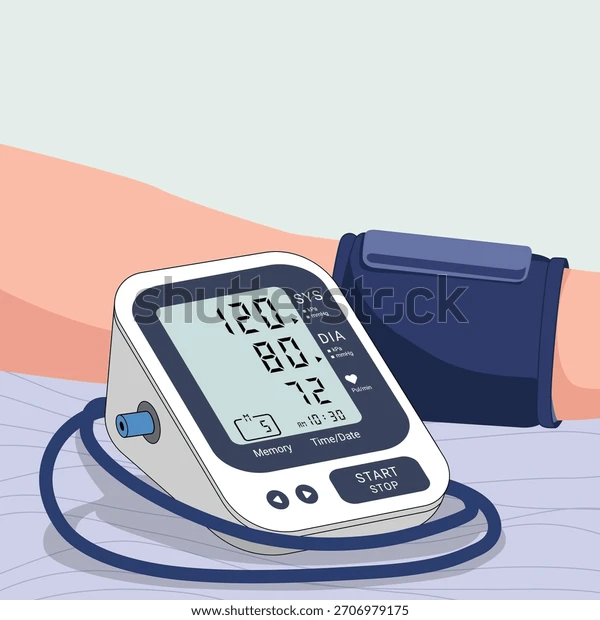
Clinic readings are unreliable. A meaningful number of patients read high in a medical setting and normal at home — white-coat hypertension — and a smaller group reads normal in clinic and high at home, which is more dangerous because it goes unnoticed.
Take your BP at home, seated and rested, twice a day for a week before your consultation, and bring the log. It is the single most useful thing you can carry into the room, and it prevents a surgery being postponed over an anxiety spike in the waiting area.
Intraoperative bleeding. The main one. It obscures the field, slows implantation, and increases graft popping.
Reduced graft survival. Indirectly — bleeding lengthens the procedure, and longer procedures mean longer out-of-body time for grafts.
Post-operative oozing and bruising. More common, and more alarming for the patient on night one.
Haematoma in the donor area. Uncommon but more likely with uncontrolled BP or ongoing antiplatelet therapy.
Cardiovascular events. Rare in a local-anaesthetic procedure, but the combination of a long stressful day, adrenaline in the anaesthetic, and uncontrolled hypertension is precisely the combination worth avoiding.
A BP surge during surgery. Anxiety, pain and adrenaline all push it up. Which is why it is measured repeatedly rather than once.
The adrenaline problem nobody explains
Local anaesthetic for a hair transplant is not plain lignocaine. It is combined with adrenaline (epinephrine), and the tumescent solution injected into the scalp contains it too. Adrenaline is what makes the surgery practical — it constricts blood vessels, reduces bleeding dramatically and makes the anaesthetic last longer.
It also raises blood pressure and heart rate. In a normotensive patient that is trivial. In a hypertensive patient, especially one who is also anxious, it is the single most likely cause of a BP spike on the table.
What a surgeon does about it:
Reduces the adrenaline concentration in the tumescent solution
Limits the total dose and spreads infiltration over the session rather than delivering it in one go
Measures BP before, during and after infiltration
Ensures BP is controlled beforehand, because a lower baseline absorbs the rise safely
This is also why patients on certain medications — notably non-selective beta blockers — need a specific mention at the consultation. The interaction between adrenaline and some cardiac drugs is real and manageable, but only if the surgeon knows in advance.
If you have had a stent, a heart attack, a stroke or a clot, and you are on aspirin, clopidogrel, ticagrelor, warfarin, or a newer anticoagulant such as apixaban, rivaroxaban or dabigatran — do not stop it for a hair transplant on anyone’s advice except your cardiologist’s.
Stopping dual antiplatelet therapy after a recent stent can cause the stent to clot, which is a life-threatening event. A hair transplant is elective cosmetic surgery. It is never worth that risk, and any clinic that tells you to “just stop your aspirin for a week” without involving your cardiologist is one to walk away from.
What normally happens instead: your cardiologist reviews why you are on the drug, how recent the cardiac event was, and decides either to pause it for a defined window, to continue it and accept more bleeding, or to advise postponing the surgery. All three are legitimate outcomes. Some surgeons will operate on a patient who stays on low-dose aspirin, accepting a bloodier field and a longer session.
Everything else
| Medication | Usual approach — confirm with your physician |
|---|---|
| Amlodipine, telmisartan, losartan, ramipril | Normally continued, including the morning dose |
| Beta blockers (metoprolol, atenolol, bisoprolol) | Continue. Abrupt stopping can cause rebound hypertension and tachycardia |
| Diuretics (hydrochlorothiazide, chlorthalidone) | Sometimes deferred to after surgery — an 8–10 hour session and a diuretic are an awkward combination |
| Aspirin, clopidogrel, anticoagulants | Cardiologist’s decision only. See above |
| Supplements: fish oil, vitamin E, ginkgo, garlic extract | Usually stopped about a week before — these genuinely increase bleeding and are often not disclosed |
That last row catches people out constantly. Patients declare their prescriptions and forget the omega-3 capsules they have taken daily for five years. Declare everything.
A home BP log - for the week before, as described above
ECG — standard for hypertensive patients and anyone over 40
Written cardiology clearance - if you have ischaemic heart disease, a stent, a previous heart attack, an arrhythmia, heart failure, or are on any anticoagulant.
Echocardiogram - if your cardiologist considers it indicated
Kidney function (creatinine, urea) and electrolytes — long-standing hypertension affects kidneys, and diuretics affect potassium.
Complete blood - count and clotting profile
HIV, HBsAg, HCV screening — required of every patient, not only hypertensive ones.
A complete medication list - prescriptions and supplements both.
If you are also diabetic, which many hypertensive patients are, you will need an HbA1c as well, and both conditions are assessed together.
Take your morning BP dose as normal — with a sip of water, unless your physician has said otherwise
Take the first slot of the day — less waiting, less anxiety, less BP drift
Skip caffeine that morning — It is a short-lived rise, but it is an avoidable one on the one day it is measured
Expect BP to be checked repeatedly — at baseline, after anaesthetic infiltration, and every 1–2 hours through a Sapphire FUE session
Say something if you feel unwell — Chest tightness, severe headache, visual change or palpitations stop the procedure, not delay a mention of it
Ask about splitting a large session — For a high graft count with borderline control, two shorter days reduce the stress load
Bring your BP monitor — if you have a portable one
This is the part most patients get wrong at home, without being told.
After a hair transplant, people reach for ibuprofen, diclofenac, naproxen or aceclofenac for discomfort. In a hypertensive patient those drugs do two unhelpful things: they raise blood pressure directly through sodium and fluid retention, and they blunt the effect of several common antihypertensives — ACE inhibitors, ARBs and diuretics in particular. In patients also on an ACE inhibitor and a diuretic, the combination additionally stresses the kidneys.
Paracetamol is the usual first-line choice after this surgery, and it is usually enough. Ask your surgeon what to take before you leave the clinic, and tell them what your cardiologist has already advised.
Two more things:
Oral steroids for swelling — sometimes prescribed to reduce forehead oedema — cause sodium retention and can raise BP for several days. Flag your hypertension before anything is prescribed.
Monitor your BP daily for the first week. Pain, poor sleep and disrupted routine all push it up at exactly the point when bleeding risk matters most.
With controlled BP, yes. Graft survival depends on the surgeon’s technique, graft handling and your donor supply — the same variables as for any patient.
The result is only compromised when bleeding is uncontrolled during the procedure, and bleeding is only uncontrolled when blood pressure was not addressed beforehand. That is a planning failure, not a consequence of having hypertension.
BP is 180/110 or above on the day, or repeatedly above 160/100 in the weeks before
You are on antiplatelet or anticoagulant therapy without written cardiology guidance
You have had a stent, heart attack or stroke within the last 6–12 months
There is unstable angina, uncontrolled arrhythmia or decompensated heart failure
Cardiology clearance has been asked for and not provided
In almost every case the word is postponed, not refused. Blood pressure is one of the most treatable conditions in medicine; a patient turned away in one month is frequently operable in the next. Every surgery at Ryan Clinic is planned and performed by the doctors, which includes making that call honestly.
Ryan Clinic assesses blood pressure as part of surgical planning rather than as a formality on the day: a home BP log reviewed before a date is confirmed, cardiology clearance where indicated, adrenaline dosing adjusted for hypertensive patients, and BP monitored through the procedure.
[CONFIRM AND ADD: your BP cut-off for proceeding and for postponing; whether you require a home BP log; when you require formal cardiology clearance; your intraoperative BP monitoring interval; how you adjust adrenaline concentration in hypertensive patients; your standard post-operative analgesic and whether it differs for hypertensive patients; your policy for patients who remain on low-dose aspirin.]
Free scalp analyses are available at our Delhi, Mumbai and Hyderabad centres, and full pricing is on our hair transplant cost page.
Book a free scalp analysis — bring a week of home BP readings and your medication list.
Frequently Asked Questions
Yes, if blood pressure is controlled. Most surgeons want readings below 140/90 mmHg on the day and will postpone above 160/100. At 180/110 or higher, surgery is not performed and the patient is referred for immediate management.
No. Take your usual morning dose, including beta blockers, unless your physician instructs otherwise. Stopping beta blockers abruptly can cause rebound hypertension. Diuretics are sometimes deferred to after the procedure because of its length.
Only if your cardiologist says so. Patients on aspirin or other antiplatelets after a stent, heart attack or stroke must never stop them for elective cosmetic surgery without cardiology approval. Some surgeons will operate with the patient still on low-dose aspirin.
Yes. Higher arterial pressure increases bleeding from the thousands of small incisions involved, which obscures the surgical field, can dislodge newly placed grafts, and lengthens the procedure. Controlled BP largely removes this problem.
It is used routinely, with adjustments. Adrenaline reduces bleeding but raises blood pressure and heart rate, so surgeons lower its concentration, limit the total dose and monitor BP through the session. Tell your surgeon about every cardiac medication beforehand.
Generally no. NSAIDs such as ibuprofen and diclofenac raise blood pressure and reduce the effect of ACE inhibitors, ARBs and diuretics. Paracetamol is usually recommended instead. Confirm with your surgeon before leaving the clinic.
If you have ischaemic heart disease, a stent, a previous heart attack, an arrhythmia, heart failure, or take any anticoagulant — yes, in writing. For uncomplicated well-controlled hypertension, an ECG and a physician review are usually sufficient.
For more on planning a hair transplant, browse our more guides.
Sources
International Society of Hair Restoration Surgery (ISHRS) — patient assessment and perioperative planning guidance.
Indian Guidelines on Hypertension / Association of Physicians of India — blood pressure classification and perioperative management.
American College of Cardiology / American Heart Association — perioperative cardiovascular evaluation for non-cardiac surgery, and guidance on antiplatelet therapy after coronary stenting.
Journal of Cutaneous and Aesthetic Surgery / Indian Journal of Dermatology — tumescent anaesthesia, adrenaline use and bleeding control in hair restoration surgery.
Published literature on NSAID-induced blood pressure elevation and interaction with antihypertensive therapy.
About the author Dr. Pranendra Singh is a hair restoration surgeon at Ryan Clinic, Delhi, specialising in Sapphire FUE. Read full profile →
Medical disclaimer: This article is general information and does not replace medical advice. Blood pressure targets, medication timing and surgical suitability must be decided by your treating physician, your cardiologist where relevant, and your surgeon together. Never stop or alter any prescribed medication — particularly antiplatelet or anticoagulant therapy — on the basis of this article.
Book Your Free Consult Now!